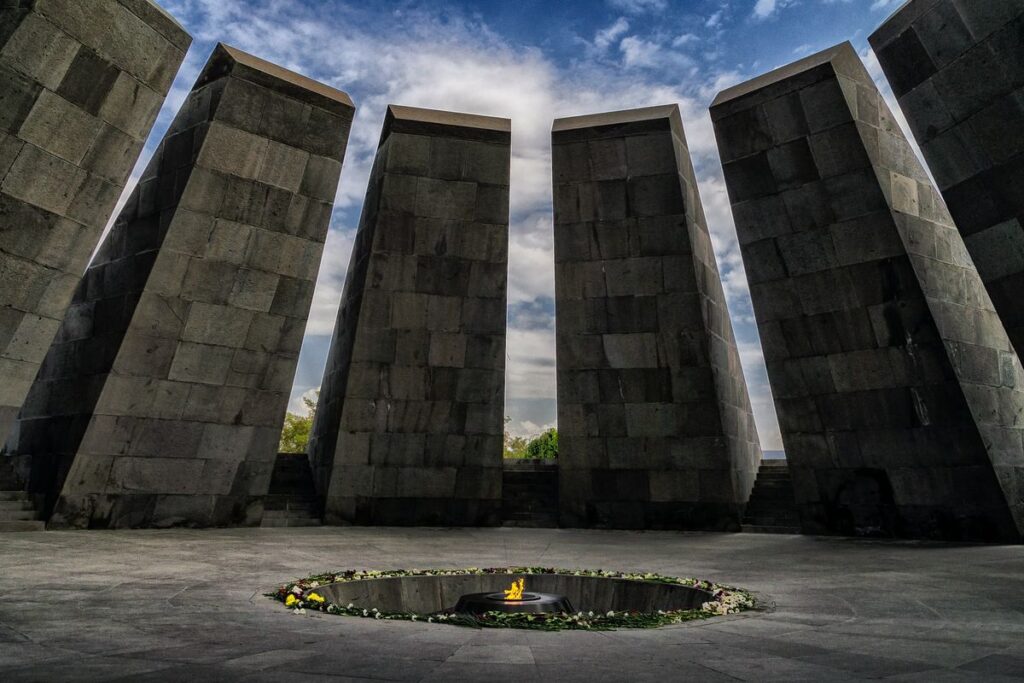
Glendale, April 21, 2025 — A hush fell across the historic Alex Theatre as Glendale came together to honor more than a century of memory, loss, and cultural endurance. The City of Glendale hosted its 24th Annual Armenian Genocide Commemoration—a powerful, free public event that blends solemn remembrance with artistic resonance.
Setting the Stage for Reflection
At 6:00 PM sharp, the Alex Theatre—an Art Deco gem in the heart of Glendale—opened its doors. It welcomed a crowd united in purpose: to remember the 1.5 million lives lost in the Armenian Genocide, and to honor the unwavering spirit of survival and resilience.
Mayor Elen Asatryan, carrying both the weight of history and a quietly fierce optimism, reflected on how this commemoration stretches beyond memory—transcending into solidarity. Her words reminded the audience that while we remember the past, we must also raise our voices for the present: “Even 110 years later, Armenians continue to face persecution, displacement, and cultural erasure.”
When Music Meets Memory
The program wove together voice, tradition, and improvisation in ways both stirring and graceful:
- Joel Martin’s Jazzical Komitas took center stage, weaving jazz improvisations into the fabric of Komitas’s classical Armenian melodies—creating a musical bridge that honored tradition while pushing it forward.
- The Haikian Chamber Choir, under the guidance of Artistic Director Gayane Baghdasaryan, delivered Fragments from Oratorio in Memory of Victims of the 1915 Armenian Genocide. Accompanied by an orchestra led by Mikayel Avetisyan, with soloists Gayane Sahakyan and Gegham Manukyan and dancer-choreographer Aida Amirkhanian adding movement to the picture, their performance was a chant of memory, presence, and grace.
- The Lernazang Ensemble, led by Armen Adamian and Natalie Kamajian, brought traditional Armenian folk music and dance to life. It was a rhythmic embrace of cultural endurance—a reminder of the stories that survive in song and step alone.
Poet Laureate Raffi Joe Wartanian added his voice to the tapestry with a lyrical reading that fused grief with hope—a human moment, personal yet collective.
Honoring While Bearing Witness
This event wasn’t about looking back with sadness alone—it carried urgency. Glendale’s commemoration firmly linked the 1915 atrocity with ongoing struggles. This includes recognition of the 2020 attacks on Artsakh, the 2023 displacement of over 120,000 Armenians, and the continued detention of Armenian POWs. With creative expression and civic courage, the city reaffirmed that remembrance is not passive—it is a call to action.
Why This Matters—Beyond the Ceremony
In a city where Armenian heritage pulses through neighborhoods, church steeples, shops, and street corners, this event carries deep resonance. Glendale’s identity is profoundly shaped by Armenian-American stories, paths, and perseverance. Holding this commemoration in such a central and cultural venue—the Alex Theatre—reflects the symphony of artistic pride, cultural pride, and political resolve.
The audiovisual environment—vast stage lighting, echoes of harmonies, choreography grounded in tradition—created a space of remembrance that was more embodied than intellectual. It honored trauma, yes—but it also honored survival.